
24 Tech Trends That Will Actually Change Your Life in the Next 5 Years
Forget the flying cars. The real revolution is already running quietly in the background.
We’ve been burned by tech predictions before. Remember when everyone said VR was going to replace movie theaters by 2020? Or when blockchain was supposedly going to fix everything from supply chains to your morning coffee order? Bold predictions age about as well as a milk carton left on a dashboard in July.
But something genuinely different is happening right now. Several technologies that spent the last decade maturing in research labs are simultaneously crossing the threshold from “cool demo” to “actually useful.” AI, quantum computing, biotech, autonomous agents, and immersive interfaces aren’t just converging; they’re weaving themselves into the fabric of how you work, get healthy, spend money, and experience the world.
This isn’t sci-fi. This is the next five years.
Let’s break down the 24 trends that actually matter, organized around the areas of your life they’ll hit hardest.
The AI Revolution Gets Real
1. AI Agents That Actually Do Stuff
The first wave of AI gave you a chatbot that could answer questions. Impressive, sure. About as useful as having a brilliant friend who only gives advice but never lifts a finger.
The next wave is different. Agentic AI systems can plan, use tools, and execute multi-step tasks on your behalf: booking trips, reconciling invoices, drafting proposals, coordinating calendars, and even negotiating contracts under human oversight.
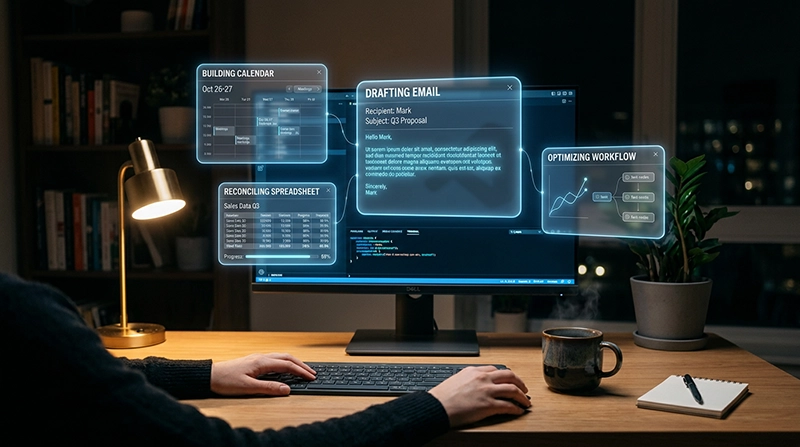
By 2030, delegating “set up my new product launch” to an AI agent will feel as normal as sending a Slack message. The agent orchestrates other specialized agents, APIs, and apps, then comes back with the work mostly done. It’s not magic; it’s just really well-organized automation with judgment baked in.
2. Vertical AI: The Specialists Are Here
General-purpose chatbots are already giving way to vertical AI agents, domain-specific systems trained deep and narrow on specific industries. Think less Tony Stark’s JARVIS and more an incredibly focused surgical resident who only knows one hospital’s protocols, insurance rules, and local regulations (but knows them cold).
In practice, this looks like:
- A clinical AI handling triage, note drafting, scheduling, and claim coding for a specific health system
- A construction AI with full working knowledge of local zoning codes, building regulations, and regional supply chains
- A retail AI linking supplier data, inventory levels, promotions, and demand signals in real time
These agents don’t just answer questions. They make and execute operational decisions within guardrails. Expect fewer pointless meetings and status emails across entire industries.
3. AI That Actually Knows You
Right now, every AI conversation starts from scratch. You re-explain your tone, your budget, your preferences, your risk tolerance. Every. Single. Time.
Context-adaptive AI changes that. These systems build a persistent memory of your preferences, patterns, and constraints. Your AI layer will remember which vendors you trust, how your household spends, what your team’s workflows look like, and what you consider “urgent” versus “can wait.”
Think of it like a really good executive assistant who’s been with you for five years, except they also have perfect recall. Privacy governance will be a huge piece of this, so expect local, on-device models and personal “AI profiles” that you can port between services, similar to how social logins work today.
4. Multi-Agent Teams: Your Invisible Digital Staff
If a single AI agent is powerful, a coordinated team of them is transformative. Emerging architectures orchestrate planner agents, worker agents, and critic agents working together on complex tasks.
Imagine saying, “Launch a B2B campaign for our new SaaS product in New York,” and watching a planner agent break it into steps, worker agents generate assets and set up campaigns, and critic agents stress-test the plan against budget, compliance, and performance benchmarks. All while you get coffee.
For small businesses and solopreneur workflows, this is going to feel like suddenly having a 10-person digital team. The playing field between bootstrapped founders and large enterprises is about to get very interesting.
What’s Real, What’s Fake, and Who’s in Charge
5. Deepfakes Everywhere (And the Tools to Fight Them)
High-quality synthetic media is already here. Within five years, generating convincing deepfake audio, video, and imagery at scale will be trivially easy for anyone with a browser and a credit card. That’s both a creative superpower and a genuine threat: personalized spear-phishing, political disinformation, and synthetic fraud are all on the menu.
In response, a parallel ecosystem of authenticity tools is building fast: cryptographic content signing, watermarking standards, AI-powered detection services, and regulations forcing provenance metadata into major media platforms. Your phone, browser, and email client will increasingly flag content that fails authenticity checks, the same way spam filters work now. It won’t be perfect, but it’ll help.
6. AI vs. AI Cybersecurity
Attackers are already using AI to generate more convincing phishing emails, find vulnerabilities faster, and probe systems at scale. The defense? AI fighting back.
Defensive agents will constantly scan networks, simulate attacks, patch in real time, and target botnet infrastructure before it reaches you. On the individual level, expect smarter bank fraud alerts, continuous behavioral authentication (it knows when something “doesn’t feel like you”), and background systems that flag suspicious links wherever you work or browse.
7. AI Governance Stops Being Optional
For years, AI regulation was mostly position papers and strongly worded blog posts. That era is ending.
Governments and industry bodies are moving toward enforceable frameworks covering transparency, bias mitigation, safety testing, and accountability, especially in healthcare, finance, and employment. For users, this translates into clearer labeling of synthetic content, rights over how your data trains models, and mandatory protections in high-stakes applications. It won’t be seamless, but it’ll be real.
Quantum Computing Gets a Day Job
8. Quantum Goes from Lab to Boardroom
Quantum computing has lived in the lab for years while everyone argued about whether it would ever do anything practical. Over the next five years, that changes. Not by landing in your laptop, but by quietly powering specific commercial use cases where classical computers genuinely struggle: complex optimization, chemistry simulation, and certain machine learning tasks.
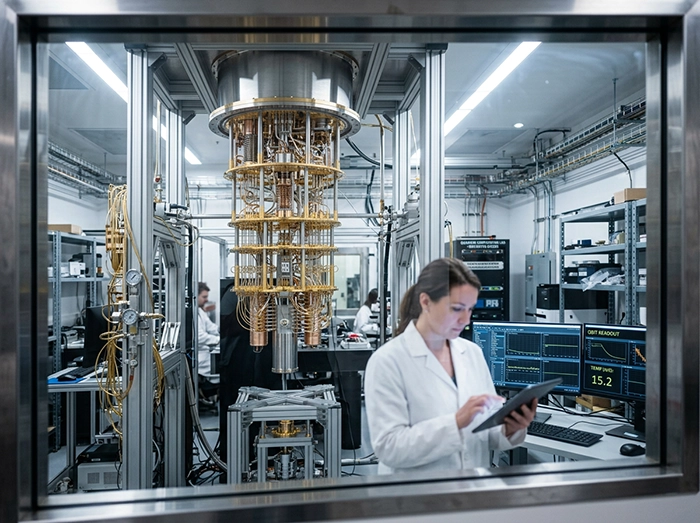
Financial institutions will tap quantum algorithms for faster risk simulations and portfolio optimization. Pharma and materials science firms will use them to explore new molecules more efficiently. You won’t notice it directly, but you’ll benefit through better drugs, more resilient materials, smarter logistics, and stronger cryptography.
9. Quantum + AI: Better Together
Quantum and AI aren’t going to evolve in separate lanes. Researchers are already exploring quantum machine learning to accelerate training, improve sampling, and solve problems that are computationally intractable today.
As quantum hardware matures, industries like drug discovery, energy optimization, and climate modeling will combine generative models with quantum solvers to navigate enormous solution spaces. The practical upshot: breakthroughs in battery chemistry, carbon capture, and personalized therapies that might otherwise take decades.
Your Health Gets an Upgrade
10. AI in Drug Discovery
Generative AI is already designing novel molecules. Over the next five years, this becomes a standard part of drug discovery pipelines, not an experimental curiosity.
AI models will propose new compounds optimized for potency, toxicity, and safety constraints, dramatically cutting the trial-and-error phase of early drug development. Combined with rich genomic and patient data, expect more targeted treatments, faster vaccine development cycles, and early-stage therapies tuned to your specific biology rather than population averages.
11. Everyday Biotech: From Lab-Grown to At-Home
Biotech is migrating from specialized labs into everyday life through cultured materials, biofabrication, and consumer diagnostics.
More foods, textiles, and packaging materials will be grown rather than harvested, with customizable properties like specific textures, durability, or nutrient profiles. Simultaneously, at-home diagnostics (AI-interpreted blood tests, microbiome analysis, continuous biomarker monitoring) will give you a personalized health dashboard long before symptoms appear. Think of it as having a doctor embedded in your morning routine.
12. Genomics Gets Personal
Genome sequencing is becoming routine rather than exceptional. In the next five years, more people will receive genomic data as part of standard care, guiding drug choices, cancer screenings, and lifestyle recommendations.
Refined gene-editing approaches will cautiously move from experimental trials into targeted therapies for specific genetic diseases, under intense ethical and regulatory scrutiny. It’s a slow burn, but it’s burning.
13. AI-Enhanced Wearables
Your smartwatch is already tracking your steps and sleep. That’s just the beginning.
Next-generation wearables will monitor heart rhythms, glucose levels, stress markers, sleep architecture, and more, then run that data through AI to give you a personalized health copilot that nudges you about early anomalies, optimizes training and recovery, and connects with clinicians when something looks off. Over time, smart implants and neural interfaces will move from medical necessity into elective enhancement for specific professions and use cases.
How You Experience the World
14. AR Glasses as a Daily Interface
Extended reality is quietly pivoting from gaming novelty to spatial computing platform. Slimmer AR glasses and mixed-reality headsets will overlay navigation, annotations, translation, and task guidance on your real-world view, turning physical environments into interactive workspaces.
Picture an AI agent whispering instructions in your field of view while you repair equipment, cook a new recipe, or navigate an unfamiliar city, without pulling out your phone. The moment this feels normal rather than sci-fi will arrive faster than most people expect.
15. AI-Generated Influencers and Synthetic Identities
Fully synthetic influencers, support reps, and spokespeople (entities that look and sound human but are entirely virtual) will become a standard tool in the brand playbook.
Companies will A/B test synthetic personalities at scale, iterating on engagement data in near real time. You’ll interact with these entities in customer support, entertainment, education, and even therapeutic contexts, often unable to distinguish them from humans unless disclosure is legally required. The ethical and trust questions here are going to be messy and fascinating.
16. AI-First Content Creation
Video, design, music, and code creation are all being reshaped by generative AI tools that handle the heavy lifting. Creators are shifting from “doing everything” to directing, curating, and refining: describing scenes instead of keyframing them, asking for variations instead of manually compositing, iterating scripts from AI-generated drafts.
New roles are already emerging, including AI art directors, dataset curators, and narrative architects, focused on vision, taste, and quality oversight rather than raw production. The craft is changing, not disappearing.
The Infrastructure Underneath Everything
17. Programmable Money for Autonomous Agents
Blockchain has cooled as a buzzword but is heating up as infrastructure for authenticity, ownership, and machine-to-machine payments. As AI agents become more autonomous, they’ll need programmable money, specifically stablecoins and smart contracts, to buy services, pay for APIs, manage subscriptions, and settle microtransactions on your behalf.
You probably won’t care which blockchain is underneath. But you’ll care that your AI CFO can audit every transaction, enforce spending policies, and prove where funds went without relying on a centralized intermediary.
18. Beyond 5G
While 5G is still rolling out in many places, early work on 6G and advanced network infrastructure is already underway, promising lower latency and higher bandwidth that enable new classes of applications.
That means more reliable real-time translation, remote surgeries, cloud gaming, and AR experiences that feel physically anchored and lag-free. Behind the scenes, AI will dynamically route traffic, prioritize critical services, and optimize energy use across vast network infrastructure.
19. Intelligent Environments
Your home, office, and city are all getting smarter. Buildings will learn patterns of occupancy, comfort, and energy use and adjust lighting, heating, and security autonomously. Cities will integrate data from traffic lights, public transit, utilities, and sensors to enable smarter routing, predictive maintenance, and better emergency response.
It’s not the Jetsons. It’s subtler and, honestly, more useful.
20. Autonomous and Semi-Autonomous Mobility
Full self-driving everywhere is still a moving target, but domain-limited autonomy in freight, warehouses, campuses, and specific routes is growing steadily. Autonomous shuttles in controlled zones, delivery robots, and highly automated highway driving are becoming increasingly routine.
Over time, this quietly reshapes shipping costs, last-mile logistics, and how younger generations think about car ownership.
21. No-Code and AI-Generated Software
Software development is becoming a collaborative conversation between humans and AI. Non-developers can already describe what they need, say “a booking system with SMS reminders and Stripe payments,” and AI-powered builders generate working prototypes.
Professional developers shift toward system design, security, and high-stakes logic, reviewing and hardening AI-generated code rather than hand-coding every feature. The barrier to building software has never been lower.
22. Energy-Aware Computing
The compute demands of AI, crypto, and data-heavy services are forcing a serious rethink of energy efficiency. Specialized chips optimized for AI inference, aggressive use of edge computing, and scheduling workloads around renewable energy availability are all becoming standard practice.
For you: longer battery life, more responsive on-device AI, and growing vendor pressure to disclose the carbon footprint of their services.
23. AI for Climate, Agriculture, and Infrastructure
AI’s potentially biggest impact might come from boring-but-crucial optimization problems: grid management, crop yields, predictive maintenance, and climate modeling.
Farmers will use AI agents that ingest satellite imagery, soil sensors, and weather forecasts to fine-tune irrigation and fertilizer. Utilities will forecast demand and balance renewables and storage dynamically. Cities will model flood and heat risks years in advance. You’ll feel this as more reliable services, fewer outages, more stable prices, and better protection against climate shocks, even if you never see a single model.
The Most Important Trend of All
24. Human Skills Are the Scarcest Resource
As automation ramps up, the scarcest resources won’t be models or GPUs. They’ll be human judgment, taste, and trust.
The most valuable professionals will be those who can aim AI at the right problems, define the right constraints, interpret outputs accurately, and communicate decisions ethically and clearly. The people who thrive won’t be the ones with the most technical knowledge of AI systems. They’ll be the ones who know how to partner with those systems to produce real-world outcomes.
In other words: tech that actually changes your life in the next five years won’t replace you. It will amplify the people who know what to do with it.
Wrapping Up
The next five years aren’t about one breakthrough technology. They’re about a cascade of maturing technologies hitting the market simultaneously, each making the others more powerful. AI agents become more useful with better networks. Quantum computing accelerates AI breakthroughs. Better health monitoring generates the data that makes personalized medicine viable. Smarter infrastructure makes autonomous vehicles practical.
The convergence is the story. And unlike flying cars, this one is already happening.
The question isn’t whether these changes are coming. It’s whether you’ll be the person directing them, or the person wondering what just happened.