UK to Regulate AI’s Use of Copyrighted Content
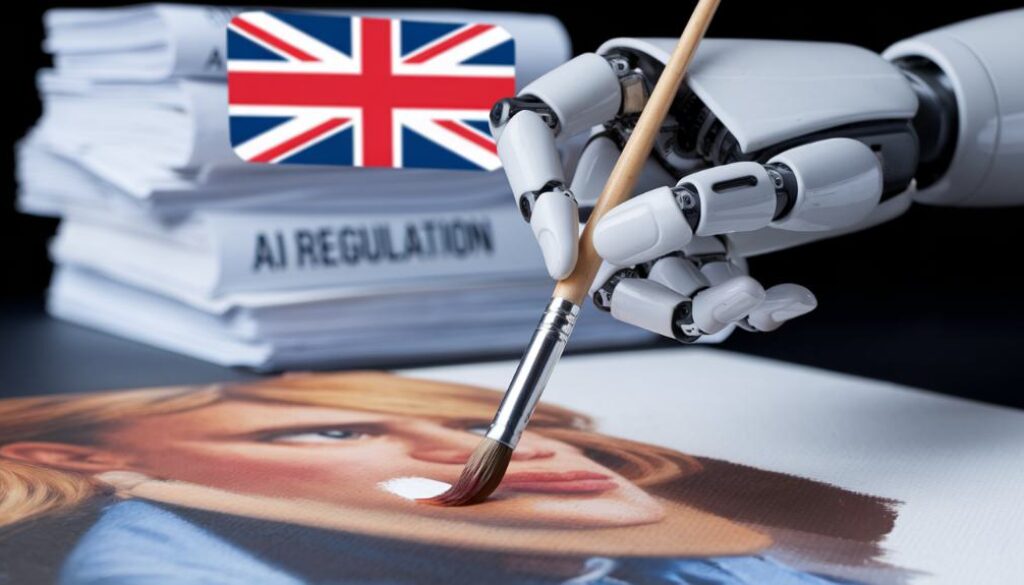
Considering the UK’s proactive approach to regulating AI’s use of copyrighted content, it’s clear that striking a balance between fostering innovation and protecting creators’ rights is a challenging feat. The proposed measures aim to navigate this complex landscape, including a copyright exemption for AI developers and mandatory transparency in training datasets. While the UK consults with creative industries to refine these regulations, you may wonder how this approach compares to other nations and what impact it could have on the future of AI and artistic integrity. The implications are far-reaching, and the outcomes will be closely watched.
Key Takeaways
- UK proposes copyright exemption for AI training, allowing the use of works unless creators opt-out
- Rights holders retain control and can license works for fair remuneration
- Mandatory transparency for AI developers to disclose training datasets used
- The consultation process aims to balance creator rights with AI innovation
- UK’s proactive regulation contrasts with the US’s reliance on existing copyright laws
Proposed Measures
The UK government’s proposed measures aim to balance safeguarding creators’ rights and fostering AI innovation.
They’re introducing a copyright exemption that allows tech firms to use copyrighted works for AI training unless creators explicitly opt-out. This guarantees rights holders retain control over their content and have the opportunity to license their works, securing fair remuneration from AI firms.
Transparency requirements are a key aspect of the proposed measures. AI developers will be mandated to disclose their training datasets, giving rights holders valuable insight into how their content is being utilized. This transparency fosters trust between the creative industries and the tech sector.
The proposed measures emphasize the need for strong enforcement mechanisms to guarantee compliance and protect the interests of both creators and AI developers.
Balancing Innovation and Integrity
Balancing innovation and artistic integrity lies at the heart of the UK’s proposed measures for regulating AI’s use of copyrighted content.
You’ll see that the government’s consultation aims to strike a delicate balance between protecting the rights of creators and fostering the growth of AI technologies. By potentially introducing exceptions to copyright law for AI training, they’re paving the way for innovation while ensuring that rights holders maintain control over their content and receive fair compensation.
Transparency is key in this equation. The proposed measures would require AI developers to disclose their training datasets, giving creators valuable insights into how their work is being utilized.
This openness is essential for building trust between the creative and tech sectors. It recognizes that while AI has the potential to revolutionize various industries, it mustn’t come at the expense of artistic integrity.
Consulting Creative Industries
Over 37,000 creatives have voiced their concerns about AI’s unlicensed use of copyrighted content, prompting the UK government to launch a consultation aimed at striking a balance between creators’ rights and AI developers’ needs.
This consultation, which will run until February 25, 2025, seeks input from creative industries to guarantee that any changes to copyright law fairly compensate rights holders while fostering AI innovation.
The government’s initiative to consult with creatives demonstrates a commitment to understanding the impact of AI on their livelihoods and the integrity of their work.
By engaging in open dialogue with artists, writers, and other content creators, policymakers can gain valuable insights into AI’s challenges and opportunities in using copyrighted material.
This consultation process is essential for developing regulations that protect the interests of creative industries while enabling the responsible development of AI technologies.
The goal is to strike a delicate balance that rewards creativity, encourages innovation, and maintains the vibrant cultural landscape for which the UK is renowned.
Transparency in AI Training
Introducing transparency requirements for AI developers marks a significant step towards fostering trust and collaboration between the creative industries and tech firms. Under the proposed measures, you must disclose the datasets used for training your AI systems. This transparency will help rights holders understand how their copyrighted content is being utilized, reducing potential legal conflicts over copyright infringement.
By clarifying your training materials’ sources and acquisition methods, you’re enabling creators to gain insights into the content used to train your AI. This enhanced control allows them to negotiate fair terms for using their work in your applications.
While you may have commercial sensitivities about your data sources, the government’s consultation seeks to balance the need for transparency with your business concerns.
These transparency measures aim to address creators’ concerns about the unlicensed use of their content while mitigating the legal risks that currently inhibit innovation in your sector. By embracing transparency in AI training, you’ll contribute to a more equitable and collaborative ecosystem that benefits both the creative industries and AI developers.
UK’s Approach vs. US
As the UK takes steps to regulate AI’s use of copyrighted content, it’s worth comparing their approach to that of the US.
While the UK aims to balance protecting creators’ rights and fostering AI innovation through proactive regulation, the US relies on existing copyright laws that aren’t tailored for AI-specific challenges.
The UK’s proposed measures, such as requiring AI firms to disclose training datasets and allowing creators to opt-out, demonstrate a commitment to transparency and fairness.
In contrast, the US legal landscape is shaped by ongoing litigation and lobbying efforts from tech giants, resulting in a reactive rather than proactive approach to AI copyright issues.
The UK’s initiative positions them as a potential leader in establishing clear guidelines for AI and copyright, while the US needs to adapt its legal framework to the rapid advancements in AI technology.
The UK’s experience with data protection laws and its focus on balancing the needs of creators and AI developers sets it apart from the US, where inconsistent enforcement and corporate interests often take precedence over the rights of content creators.
You’re witnessing a pivotal moment in AI regulation. The UK’s proactive stance balances innovation and artistic integrity, ensuring AI developers can harness copyrighted content responsibly. By consulting creative industries and mandating transparency, they’re setting a precedent that benefits both creators and tech companies. It’s a stark contrast to the US’s reactive approach, and it positions the UK as a leader in shaping the future of AI while safeguarding the rights of creators.